Campaign Management
Influencer Campaign Management Built for Food and Beverage CPG
Jupiter turns influencer campaign management from a multi-day, multi-tool process into a single focused workflow — from brief to posted content, all in one platform.
On this page
▼
- The Real Cost of Managing Influencer Campaigns Without the Right Platform
- Three Ways to Start an Influencer Campaign on Jupiter
- AI-Assisted Campaign Creation (Fastest)
- Manual Campaign Creation
- Copy an Existing Campaign
- Built-In Influencer Brief Templates for Food Brands
- What the Campaign Brief Covers
- Six Campaign Types in One Platform
- General Awareness
- Ambassadorship
- Creator Sampling
- Brand Managed
- Collab Campaign
- Retail Product Launch
- Live Campaign Operations: Real-Time Visibility
- Pre-Launch View
- Live View
- Creator Updates: Know Who Needs Action Right Now
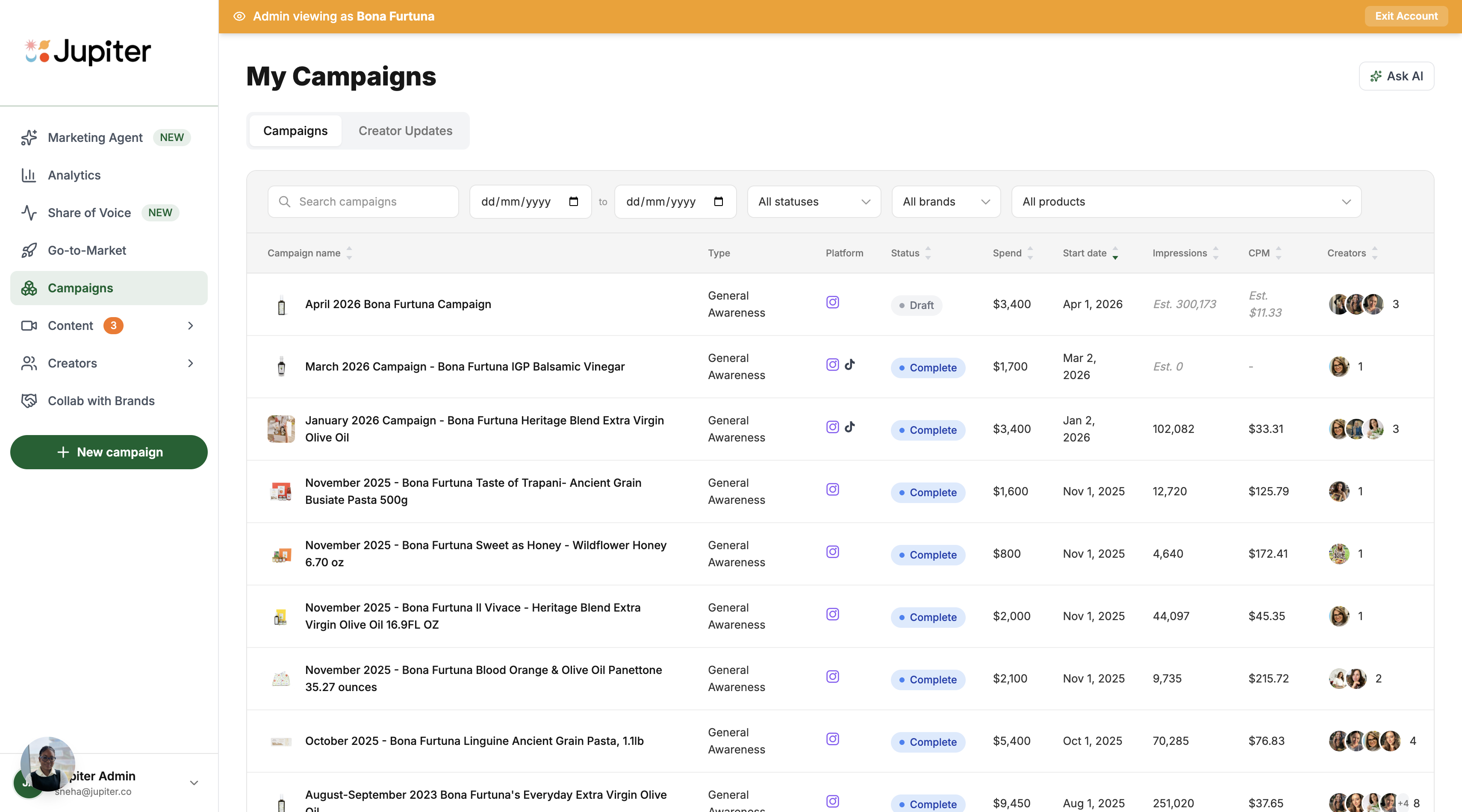
The Real Cost of Managing Influencer Campaigns Without the Right Platform
Most food CPG marketing teams manage influencer campaigns across a tangle of tools: a spreadsheet to track creators, email chains for briefs and approvals, Google Drive for content review, a separate analytics tool for performance, and manual reports assembled every month.
The result is hours of coordination work, missed posts, lost briefs, and performance data that arrives too late to act on. Jupiter replaces all of it.
Three Ways to Start an Influencer Campaign on Jupiter
AI-Assisted Campaign Creation (Fastest)
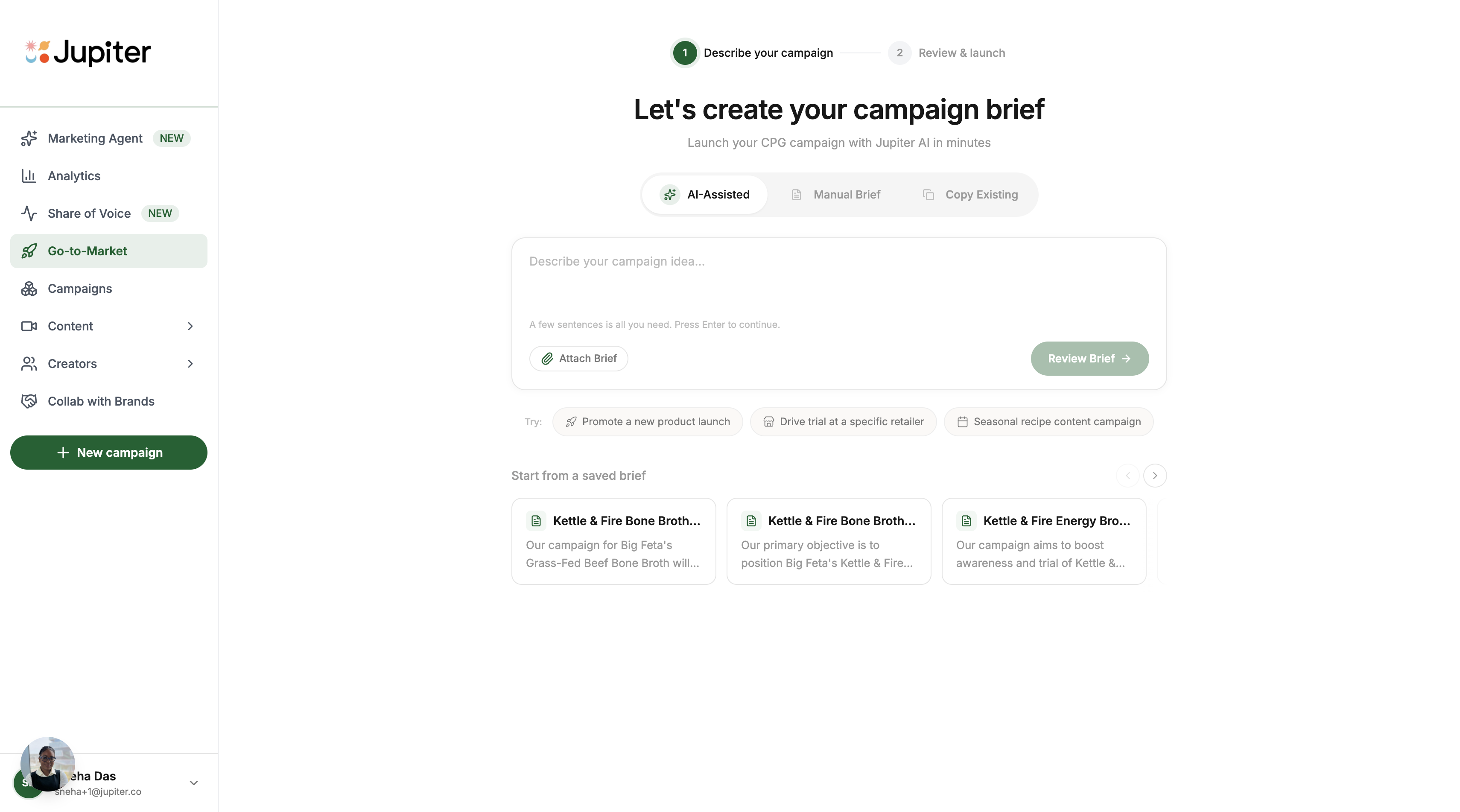
Describe your campaign in plain language. Jupiter AI extracts all the structured information — brand, product, content type, budget, creator targeting, retailer focus — pre-fills the brief and campaign design forms, and flags anything it needs clarified. A campaign that used to take a day to set up takes minutes.
Example: "We're launching a new spicy ranch dip at Kroger this spring — budget around $40K, looking for recipe creators in the Midwest."
Manual Campaign Creation
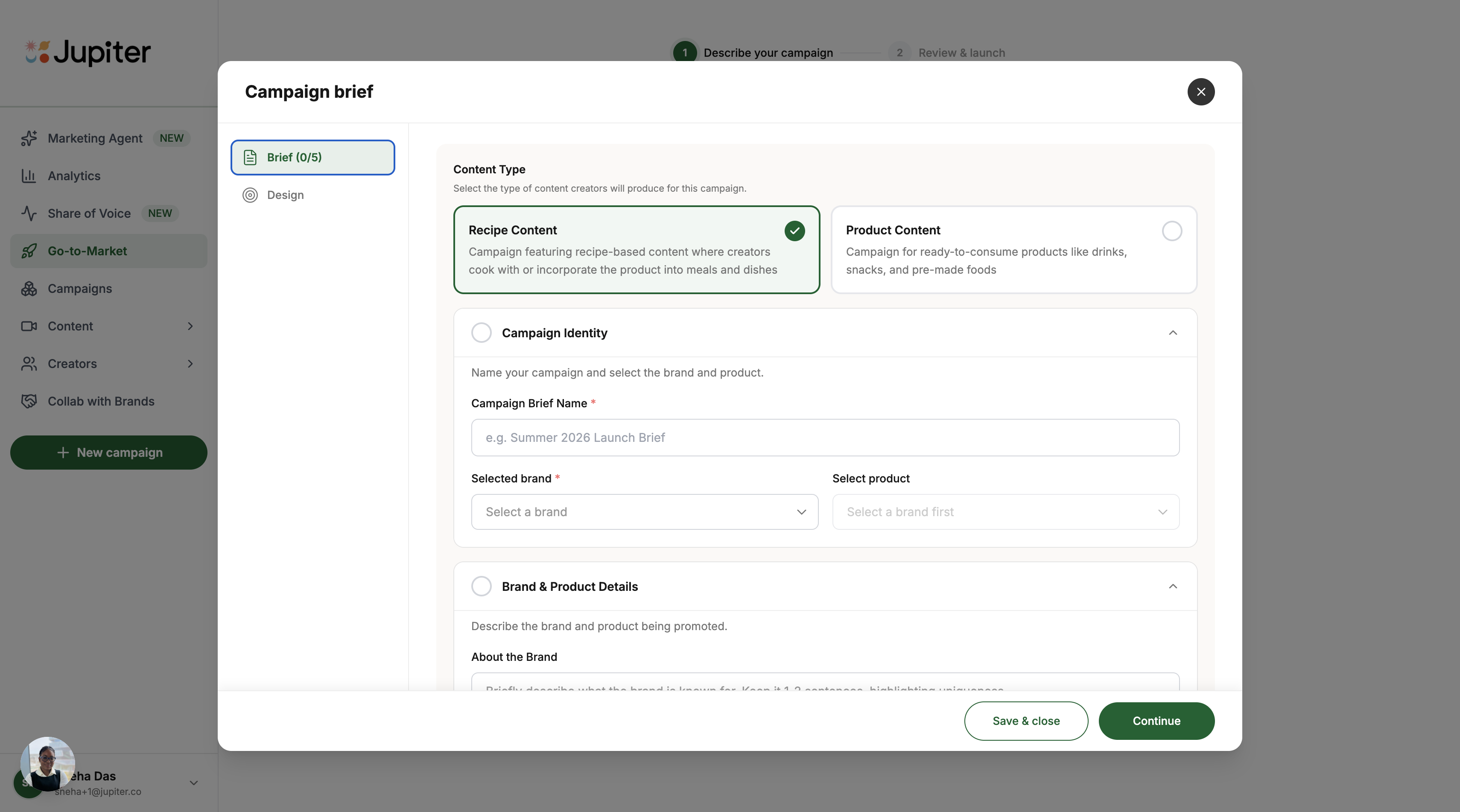
Open a blank brief form and fill in the fields yourself — useful when you already have all the details ready and want direct control over every field.
Copy an Existing Campaign
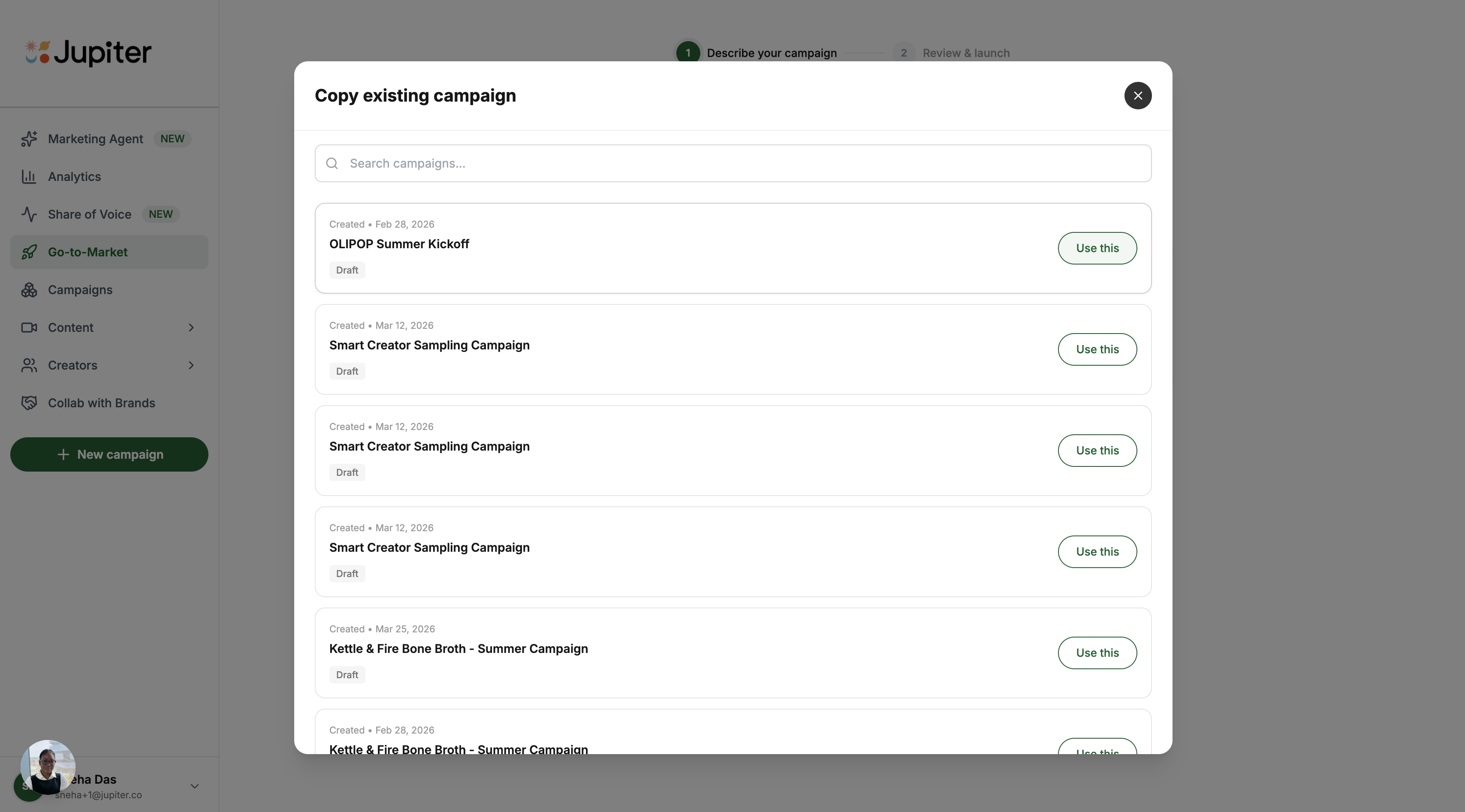
Find a past campaign that performed well and duplicate its brief, targeting, and creator selection as a starting point. Ideal for recurring seasonal campaigns, annual product launches, or repeating ambassador cycles.
Built-In Influencer Brief Templates for Food Brands
Every campaign starts with a structured brief that covers everything a food creator needs to produce great content — and everything your team needs to stay on brand.
What the Campaign Brief Covers
Brand story and brand voice
Product name, description, and retail price
Content type: recipe-focused or product-focused
Recipe concepts and cooking instructions
Product usage scenarios and lifestyle context
Taste experience points
Creative hooks and thought starters
Key messages and mandatory inclusions
Deliverables and posting requirements
Campaign goal and success metrics
Exclusivity requirements and content guidelines
Briefs are saved to your account and reusable across campaigns. Jupiter tracks how many campaigns each brief has powered, so you know which creative directions have the most history.
Six Campaign Types in One Platform
Jupiter supports every influencer campaign format used by food CPG brands:
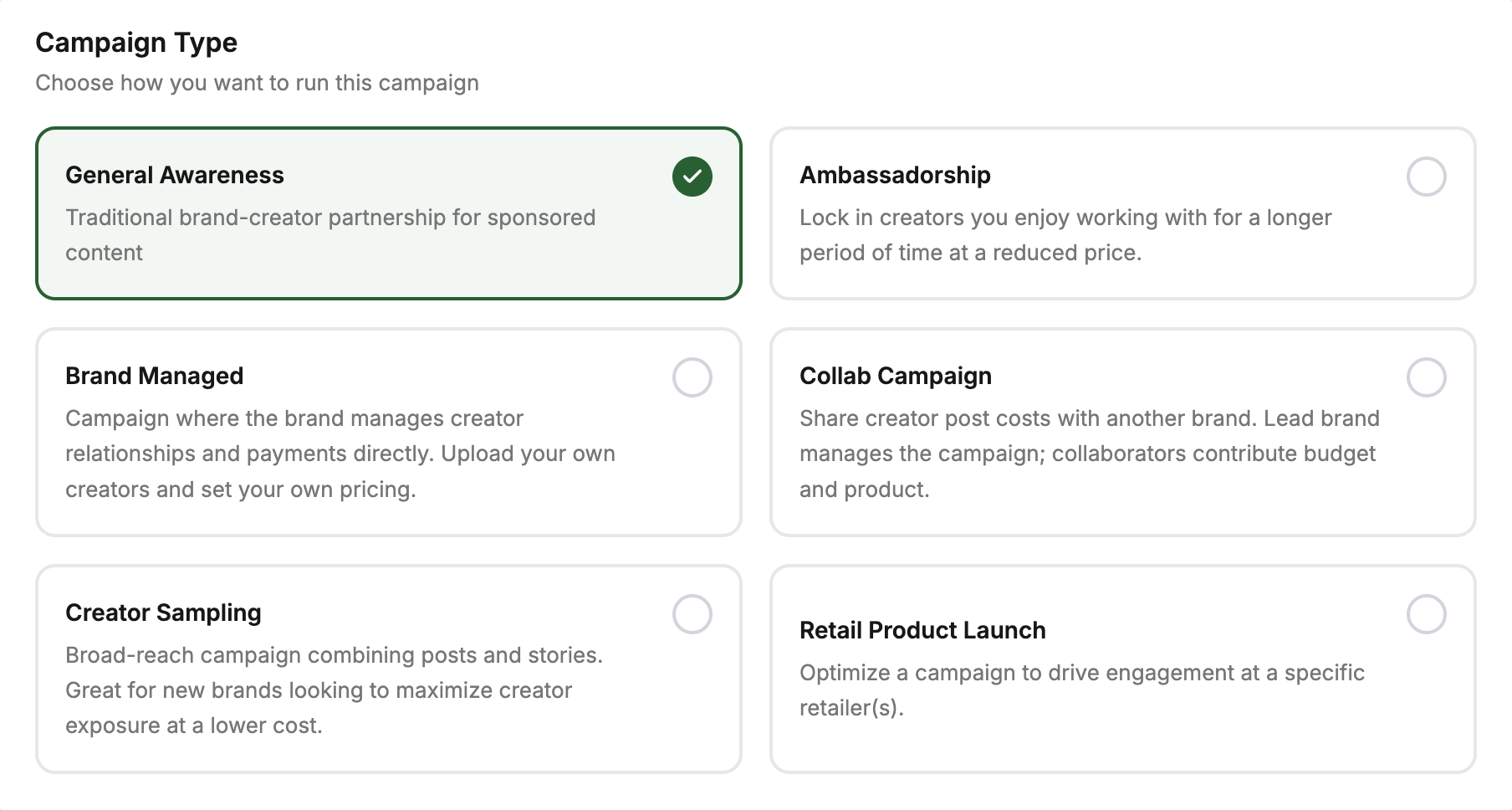
General Awareness
Traditional paid brand-creator partnerships for sponsored content. The creator posts about your product in their own voice within your brief guidelines.
Ambassadorship
Long-term creator relationships with tiered commitments and rates. Lock in your best-performing creators for months-long partnerships with consistent posting schedules and reduced per-post rates.
Creator Sampling
Broad-reach campaigns combining posts and stories. Ideal for new food brands looking to maximize creator exposure at a lower cost. Creators receive your product and post organically.
Brand Managed
Campaigns using creators from your own imported roster. You manage the relationships and set your own pricing. Jupiter handles brief delivery, content scheduling, and performance tracking.
Collab Campaign
Co-branded campaigns with another CPG brand on Jupiter. Share creator costs, split the budget by percentage, and co-promote complementary products to each other's audiences.
Retail Product Launch
Campaigns optimized to drive engagement around a specific retailer and launch window. Creator selection is prioritized by proximity to your target retail locations and timing relative to your on-shelf date.
Live Campaign Operations: Real-Time Visibility
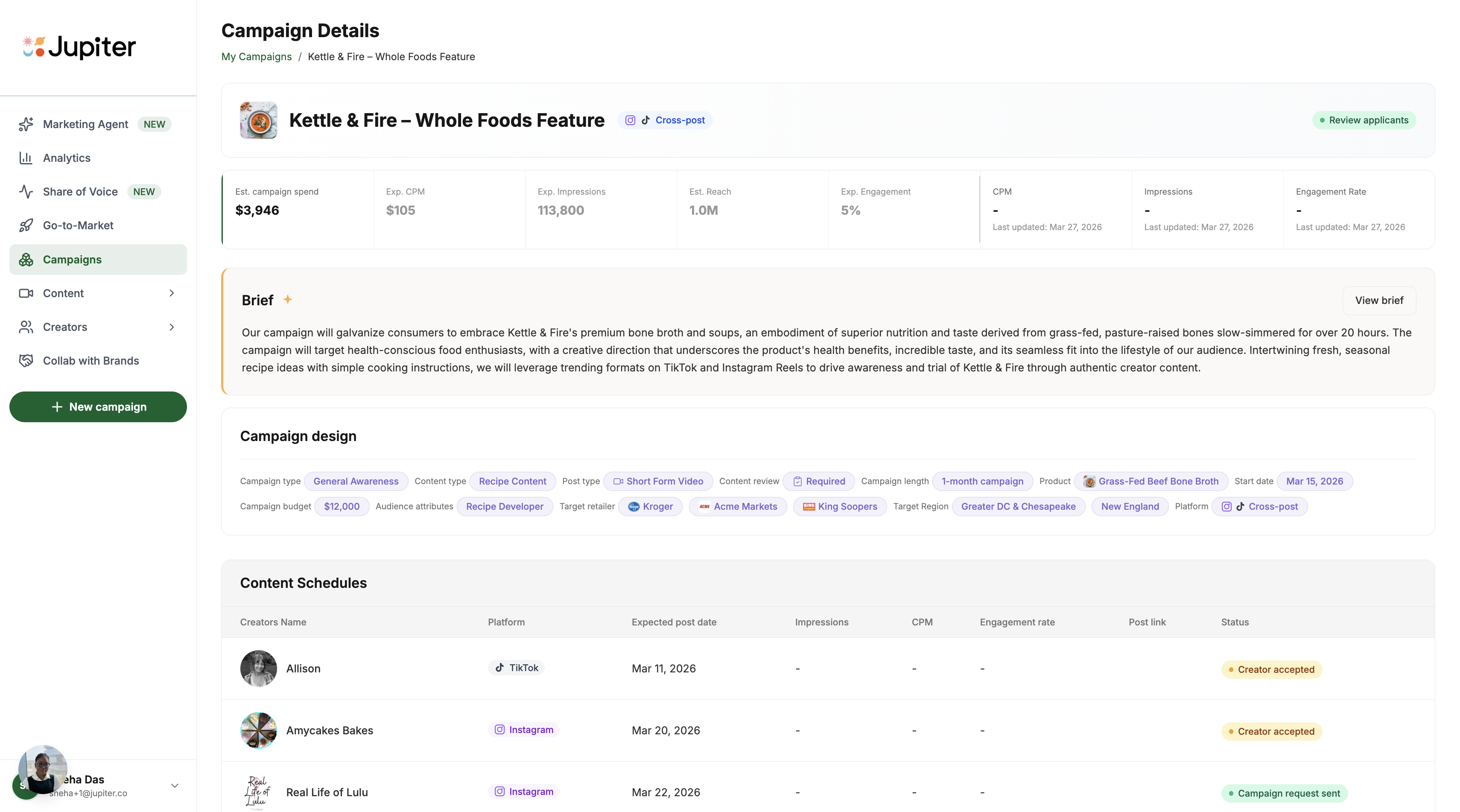
Once a campaign goes live, Jupiter's campaign detail page becomes your operations hub.
Pre-Launch View
Complete brief summary and all design settings in one place
Full creator roster with individual offer amounts and scheduled post months
Estimated impressions, CPM, and reach from the AI optimizer
Edit button with automatic change detection — Jupiter warns if a change will trigger re-optimization
Live View
Actual impressions vs. estimated impressions
Actual CPM vs. estimated CPM
Per-creator content schedule with real-time status per post: Draft → Submitted → Approved → Posted / Missed
Campaign health indicator: green (on track), yellow (minor issues), red (needs attention)
Creator Updates: Know Who Needs Action Right Now
Jupiter's Creator Updates tab shows every creator's current status across all active campaigns in a single view. Filter by status — accepted, needs content review, overdue — so your team always knows who needs a follow-up and who is on track.

Run More Campaigns With Less Coordination Work
Jupiter's campaign management platform was built for food CPG marketing teams that need to move fast, stay on brand, and prove what their influencer spend is actually doing.
Book a demoFAQs
Quick answers to common questions.
What is influencer campaign management?▼
Influencer campaign management is the process of planning, executing, tracking, and analyzing influencer marketing campaigns — including creator selection, brief delivery, content review, posting schedules, and performance measurement. A dedicated influencer campaign management platform centralizes all of these steps so marketing teams can run more campaigns with less manual coordination.
What should be included in an influencer campaign brief?▼
An influencer campaign brief should include the brand story, product description, content type (recipe, lifestyle, product review), creative hooks, key messages, mandatory inclusions, deliverable requirements, posting timeline, content guidelines, and campaign goals. For food CPG brands, briefs should also include recipe concepts, taste experience points, and retailer context so creators can produce content that drives store visits or online grocery purchases.
How do you track influencer campaign performance?▼
Influencer campaign performance is tracked by monitoring impressions, engagement rate, CPM (cost per thousand impressions), estimated vs. actual reach, posts delivered vs. scheduled, and — for retail-focused campaigns — creator-attributed traffic to retailer product pages. Jupiter provides a real-time campaign health dashboard that shows all of these metrics alongside per-creator performance data.
What are the different types of influencer campaigns?▼
The main types of influencer campaigns are: sponsored posts (paid brand partnerships), ambassador programs (long-term creator relationships), product seeding or creator sampling (gifting for organic posts), affiliate campaigns (performance-based creator promotions), and co-branded or collaboration campaigns (two brands sharing a creator campaign). Jupiter supports all of these campaign types in a single platform.
How long does it take to set up an influencer campaign?▼
With a dedicated influencer campaign management platform like Jupiter, a campaign can be set up in minutes using AI-assisted brief creation or by duplicating a past campaign. Without a platform, the same setup typically takes one to three days of manual work across spreadsheets, emails, and separate tools.